What the Bone Marrow Washing Qigong Means to Me:
A Body in Crisis, When Pain, Fear and Exhaustion took over
I have been practicing Qigong diligently since 1994. But two years before that, my health was unraveling.
I was living with persistent musculoskeletal pain—severe back pain, knee injuries from a bicycle fall, and debilitating carpal tunnel syndrome in my wrists. I had recently migrated from my hometown of Singapore to the United States, was newly married, and trying to build a life while my body seemed to be breaking down.
After a seemingly minor bike accident that injured my left knee, I did what many people did in the 1990s: I cleaned it up, put on a bandage, and moved on. But the pain never truly left. In an effort to “get healthier,” without guidance or a plan, I pushed myself into activities my body wasn’t ready for. A three-mile hike—without prior conditioning—landed me on crutches with a painful micro hairline fracture in my foot.
At the same time, I was working ten-hour days as a financial analyst, commuting nearly two hours daily on the train between the South Bay and San Francisco. The stress, exhaustion, chronic pain, low immunity, and what I now recognize as hormonal and emotional imbalance began to compound. I felt disconnected, overwhelmed, and increasingly hopeless.

A Pause — And a Mirror
If you’ve ever felt trapped in a body that no longer responds the way it used to…
If pain, fatigue, anxiety, or emotional heaviness seem to come and go without clear answers…
Or if you’ve tried “doing all the right things” and still don’t feel fully at home in yourself—
you are not alone.
At that time in my life, I only knew that I needed help—help that went deeper than symptom management.
Finding My Way Back Through Medical Qigong
After seeking answers through Western medicine with little relief, I was guided—through a series of synchronicities—back toward healing traditions rooted in my cultural heritage. A wise acupuncturist encouraged me to study Medical Qigong and seek instruction from a true master.
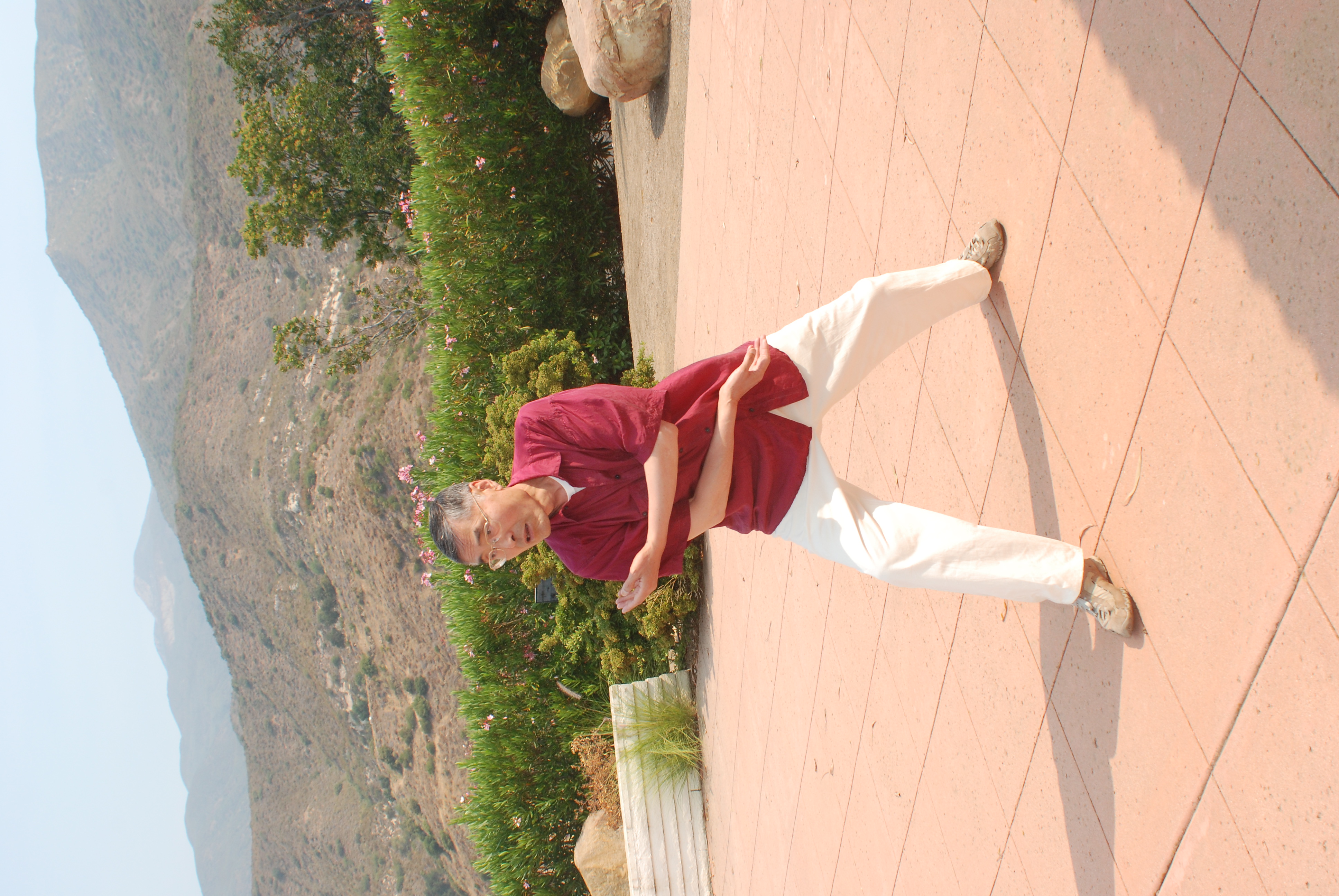
Not long after, I met Dr. Bingkun Hu, a renowned Medical Qigong Master, at the Land of Medicine Buddha Retreat Center in Soquel/Santa Cruz. From the moment I observed him, I was struck by the way he moved—effortlessly, smoothly, with joy and presence. His posture was relaxed, his steps light, and his eyes kind and deeply aware.
My early workshops with Dr. Hu focused on something deceptively simple: relaxation.
- Learning to shift weight gently.
- Drawing circles with the arms and wrists.
- Breathing naturally.
- Releasing tension again and again.
For the first time in two intense years of pain and emotional turmoil, it felt good simply to be in my body—to move, breathe, and exist without forcing or striving.
Meeting the Bone Marrow Washing Qigong
About eight months into my Qigong journey, Dr. Hu began introducing me to the Bone Marrow Washing Qigong (BMWQG) during private sessions. At that point, I had experienced some relief—but my practice was inconsistent. I practiced when I was in pain, and stopped when I felt better.
When he first taught me BMWQG, I didn’t like it.
Compared to the flowing, circular movements of Wild Goose Qigong, this form felt still, demanding, and unfamiliar. Standing in place felt stiff. My arms tired quickly. Deep bending movements felt challenging and uncomfortable.
“No,” Dr. Hu said calmly. “For you, this Qigong is essential. You must cultivate your inner strength—your heart-mind (心意). If not, the pain will return.”
I resisted internally. But something in his certainty made me listen.
What Bone Marrow Washing Qigong Was Really Teaching Me
Over time, I came to understand that Bone Marrow Washing Qigong is not about force or performance. It is about rebuilding from the inside out.
In Traditional Chinese Medicine, this practice nourishes Jing—our essence energy—supporting the kidneys, nervous system, endocrine balance, and emotional resilience. Through deep stances, gentle focus, and stillness, the body gradually shifts from chronic stress and “fight or flight” into restoration and stability.
This was not a quick fix.
It was a long-term conversation with my body.
I practiced daily—sometimes only parts of the form, sometimes imperfectly—but consistently. Over months and years, subtle changes emerged:
- My joints softened
- Pain eased
- Fear loosened its grip
- My energy stabilized
- Hope quietly returned
By year four of practice, I welcomed my first child. By year six, I had regained stamina, resilience, and strength—enough to begin weight training for the first time in my life.
The Structure of the Bone Marrow Washing Qigong
Bone Marrow Washing Qigong is a complete internal cultivation system, traditionally taught over time and refined through consistent practice. The full form consists of twelve distinct movements, each serving a specific energetic and physiological purpose.
Rather than being a single “routine,” the practice works layer by layer—calming the nervous system, strengthening the body, and nourishing the deepest reserves of vitality.
The twelve parts are traditionally practiced in the following sequence:
- Prayer
- Spreading Out the Arms
- Looking Into the Heavens
- Picking Stars
- Pulling the Ox's Tail
- Pushing & Pulling the Qi (A & B)
- Grabbing and Pulling the Ear
- The Goose Slowly Descends
- The Blue Dragon Pierces the Sky
- Hungry Tiger Catches Its Prey
- Beating the Heavenly Drum
- Prayer
When I first encountered these movements, many of them felt physically demanding and energetically unfamiliar. Standing still for extended periods challenged my patience. Deep bends and sustained arm positions tested my strength and focus.
What I did not yet understand was that each posture was quietly rebuilding my inner stability—physically, emotionally, and energetically—preparing my system for lasting healing rather than temporary relief.
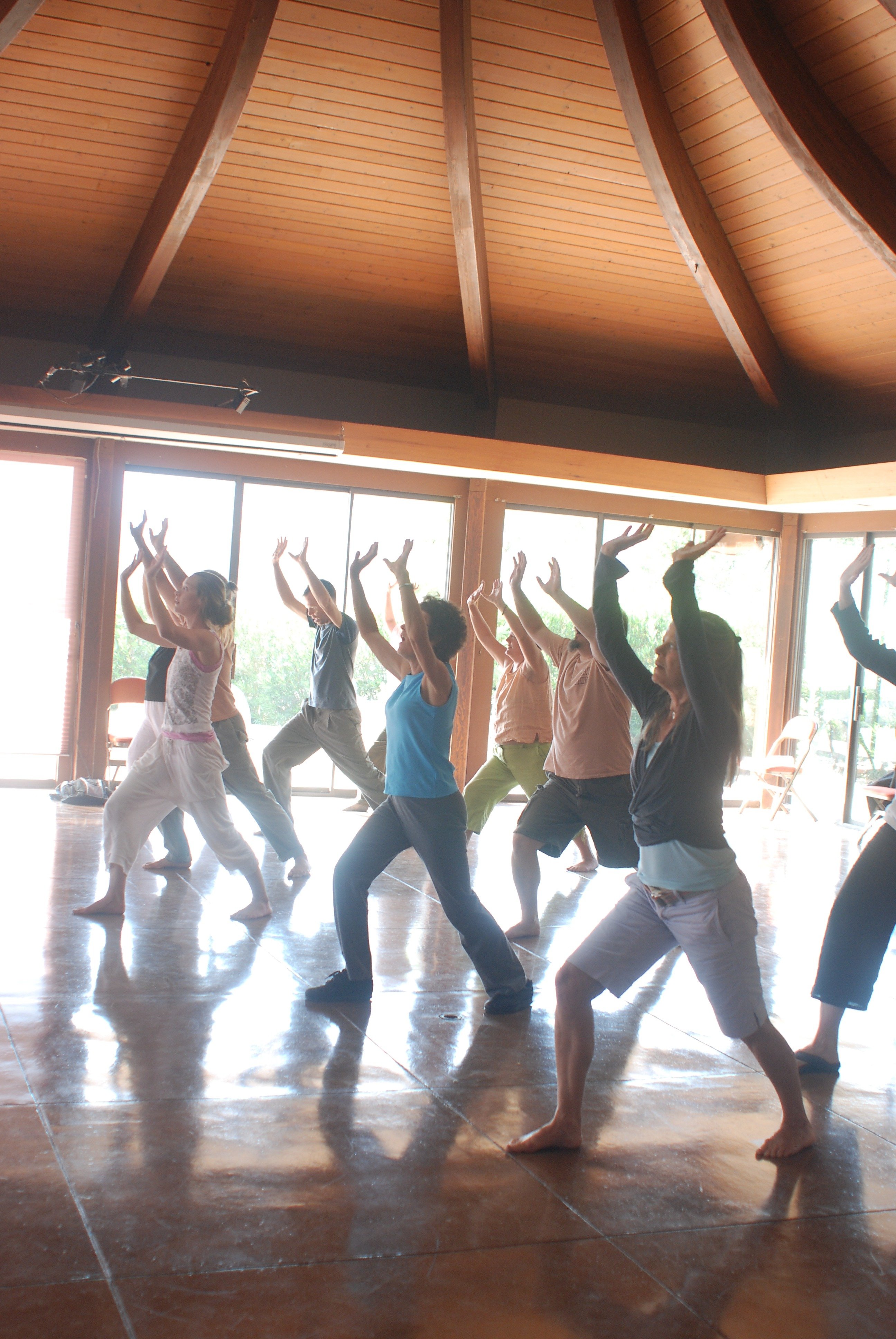
In my retreats and QiMastery, I teach these movements progressively, with care for safety, individual constitution, and inner awareness—so the practice supports healing rather than strain.

Tips for a Successful Bone Marrow Washing Qigong Practice
Through decades of practice and teaching, I’ve found these principles essential:
- Consistency matters more than intensity
Even short daily practice helps retrain the nervous system. - Move slowly and gently
Slowness allows Qi to settle and nourish deeply. - Regulate emotions before practice
A short walk can help Qi flow more smoothly. - Relaxation is foundational
Tension blocks healing; softness invites it. - Be patient with yourself
True healing unfolds in small, steady steps. - Maintain gentle awareness
Soft focus brings the heart, mind, and body back into alignment.
Bone Marrow Washing Qigong builds stamina—physically, emotionally, and spiritually—over time. Its strength lies in gradual, sustainable transformation
Enter your name and email to download the PDF version of this blog.
Thank you! The blog should be delivered shortly.
Check your inbox or spam folder.
Otherwise contact us at: support@qi-mastery.com
✨ Want More Support?
You can learn the full Bone Marrow Washing Qigong, 12 Treasures Qigong, Wild Goose Qigong, and Natural Pain Relief practices with me:
Aileen C. Jong, LAc, Dipl. O.M., MQT