Can the Aging Brain Still Learn?
How Qigong Supports Neuroplasticity, Memory and Life Long Learning
Explore how Qigong supports neuroplasticity, memory, and learning as we age—bridging modern neuroscience and Traditional Chinese Medicine
I. Winter, Water, and the Conditions for Learning
In Traditional Chinese Medicine, learning and memory are not viewed as isolated brain functions. They arise from the health of the whole system—particularly the quality of our rest, emotional regulation, and deep reserves of vitality.
Winter, associated with the Water element, is a time for storing, restoring, and protecting our Jing (Essence). Jing nourishes the kidneys, adrenals, brain, marrow, and nervous system. When these foundations are depleted, the ability to absorb, retain, and apply new information naturally declines—regardless of motivation, intelligence, or effort.
From a TCM perspective, learning capacity depends less on “trying harder” and more on whether the internal conditions for learning are supported.
II. What Modern Neuroscience Tells Us About Learning as We Age
Western neuroscience now echoes this ancient understanding. Research shows that while the human brain remains capable of learning throughout life, how it learns changes significantly after early adulthood.
In childhood and adolescence, we benefit from passive neuroplasticity—the brain absorbs information easily and automatically. By the mid-20s, however, this developmental plasticity tapers off. Learning does not stop, but it becomes active and effort-dependent.
Adult learning requires:
• Sustained attention
• Emotional safety
• Repetition with meaning
• Adequate sleep
• Reduced stress and inflammation
In other words, the adult brain does not resist learning—it requires the right internal conditions for learning to occur.
This growing research on neuroplasticity and aging helps explain why practices like Qigong for brain health are increasingly relevant for adults seeking to maintain memory, focus, and learning capacity over time.

III. An Eastern–Western Bridge: Two Languages, One Truth
TCM and neuroscience describe the same phenomenon using different frameworks.
In both systems, memory is not simply stored. It is consolidated through repetition, emotional relevance, and physiological safety. When stress hormones remain elevated, sleep is disrupted, or emotional tension dominates, learning becomes inefficient and fragmented.
Qigong addresses these barriers not by forcing cognition, but by restoring the internal environment in which memory and learning naturally form.
IV. Qigong as Active Neuroplasticity Training
Qigong does not enhance learning by adding more information. It enhances learning by restoring clarity, emotional stability, and sustained attention.
These are precisely the conditions required for active neuroplasticity—the form of learning that remains available throughout adulthood and into older age.
This is where the relationship between Qigong and neuroplasticity becomes especially relevant for adults seeking to maintain learning capacity as they age.
Through coordinated movement, breath regulation, and mindful attention, Qigong trains:
- the Yi (意) — focused intention
- the parasympathetic nervous system — emotional safety
- embodied repetition — memory consolidation
This is why Qigong is not merely a wellness exercise, but a lifelong learning practice.
🌿 Want to experience these benefits directly?
Start with gentle Qigong practices with the QiMastery Program App here:
Start with Bone Marrow Washing Qigong for Memory Improvement and Inner Strength Cultivation, & explore in-person Qigong Workshops and Retreats.
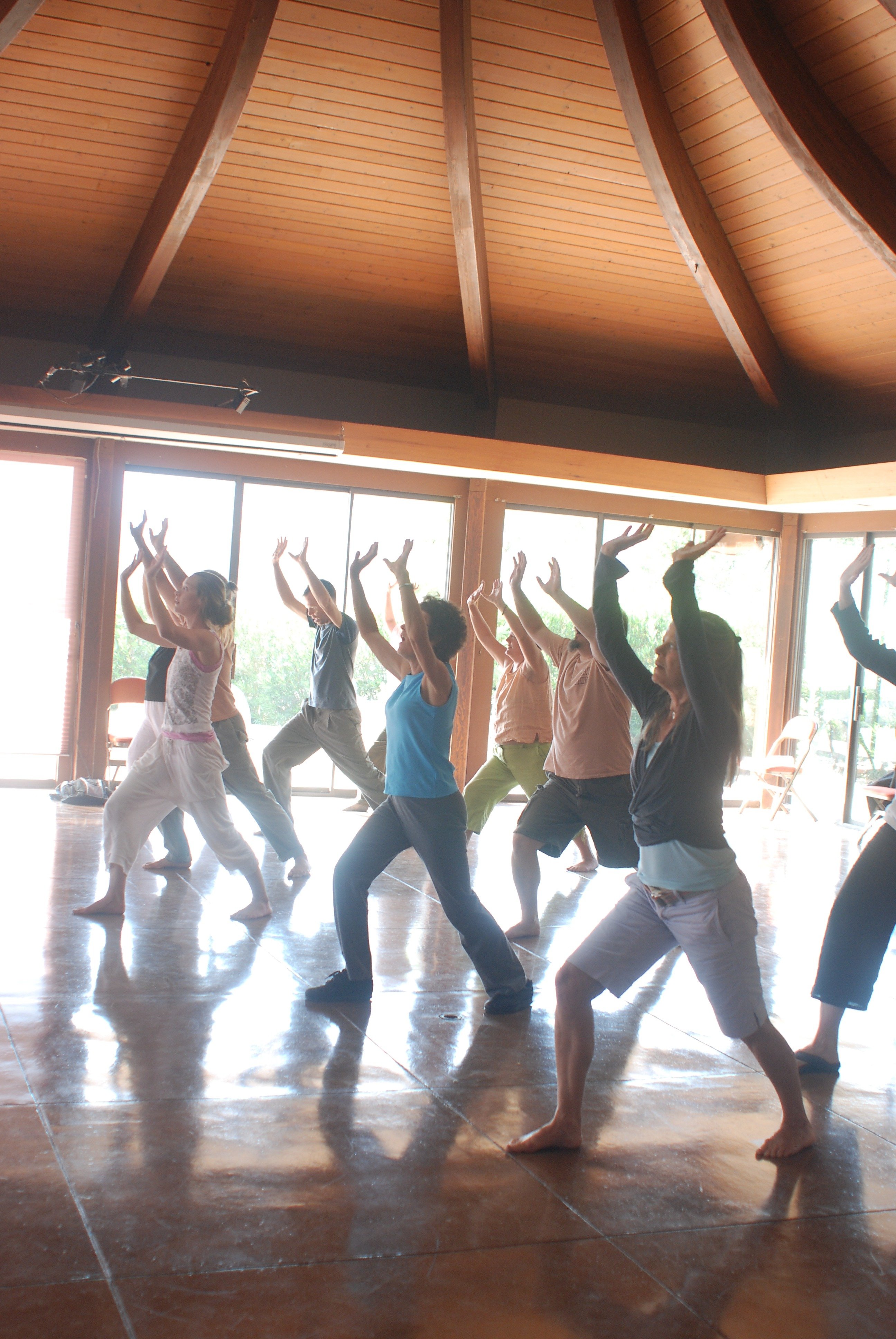
V. How to Practice Qigong to Support Learning as We Age
- Slow, mindful practice
Moving slowly with focused attention allows Qi to arise smoothly and safely, without strain on the nervous system. - Sustained attention
Practicing one movement or sequence at a time helps the brain process complex information more efficiently and builds longer attention spans. - Emotional regulation before practice
If emotionally agitated, taking a short walk before practice can calm Liver Qi, allowing learning and memory processes to engage more deeply. - Adequate sleep and nourishment
Sleep and nutrition replenish short-term resources so long-term learning capacity can be maintained. - Repetition without strain
Qigong’s gentle repetition challenges the brain without overwhelming it, allowing learning to occur calmly and sustainably.
VI. Why Bone Marrow Washing Qigong Matters Here
This is why I continue to emphasize Bone Marrow Washing Qigong as a foundational practice.
This form directly nourishes the Kidney system—the root of memory, resilience, and long-term vitality in TCM. By supporting the brain, marrow, nervous system, and adrenals, it creates the physiological and emotional conditions necessary for continued learning as we age.
When practiced consistently, Bone Marrow Washing Qigong becomes not only a health practice, but a lifelong learning practice—supporting clarity, adaptability, and inner stability across all stages of life.
VII. A Closing Reflection
Aging does not mean the end of learning. It means learning requires cultivation.
When we support the body, regulate the emotions, and train focused awareness, the capacity to grow, adapt, and learn remains available to us—well into later life.
This is the heart of Qigong practice, and the foundation of the work I teach.
✨ Want to Go Deeper?
If this resonates with you, I invite you to explore my Bone Marrow Washing Qigong and Wild Goose Qigong trainings, retreats, and the QiMastery program—designed to support clarity, resilience, and lifelong learning through embodied practice.
References & Further Reading
Neuroscience & Neuroplasticity
- Draganski, B., et al. (2004). Neuroplasticity: Changes in grey matter induced by training. Nature.
- Kolb, B., & Whishaw, I. Q. (1998). Brain plasticity and behavior. Annual Review of Psychology.
- Doidge, N. (2007). The Brain That Changes Itself. Viking Press.
Learning, Attention, and Adult Neuroplasticity
- Huberman Lab Podcast, Stanford University School of Medicine
- Episodes on learning, focus, neuroplasticity, sleep, and stress regulation
- Fields, R. D. (2005). Myelination and learning. Nature Neuroscience.
Stress, Sleep, and Memory
- Walker, M. (2017). Why We Sleep. Scribner.
- McEwen, B. S. (2007). Physiology and neurobiology of stress and adaptation. Physiological Reviews.
Integrative & Mind–Body Practices
- Tang, Y.-Y., Hölzel, B. K., & Posner, M. I. (2015). The neuroscience of mindfulness meditation. Nature Reviews Neuroscience.
- Qigong Institute Research Database (qigonginstitute.org)
Note: These sources are provided for educational purposes and to support integrative understanding of learning, neuroplasticity, and mind–body practices.
Enter your name and email to download the PDF version of this blog.
Thank you! The blog should be delivered shortly.
Otherwise contact us at: support@qi-mastery.com
📘 Download a guided Qigong resource to support memory, relaxation, reduce pain and support brain health:
Ready to go deeper to maintain our brain's ability to learn?
If you are navigating stress, hormonal changes, immune imbalance, or simply feel disconnected from your own vitality, you do not have to do this alone.
You can work with me through:
• Private acupuncture sessions in Cupertino
• Small group Qigong workshops
• The QiMastery App for guided home practice
• Upcoming retreats focused on Heart–Kidney integration
Healing is not forced. It is cultivated — with guidance and consistency.